


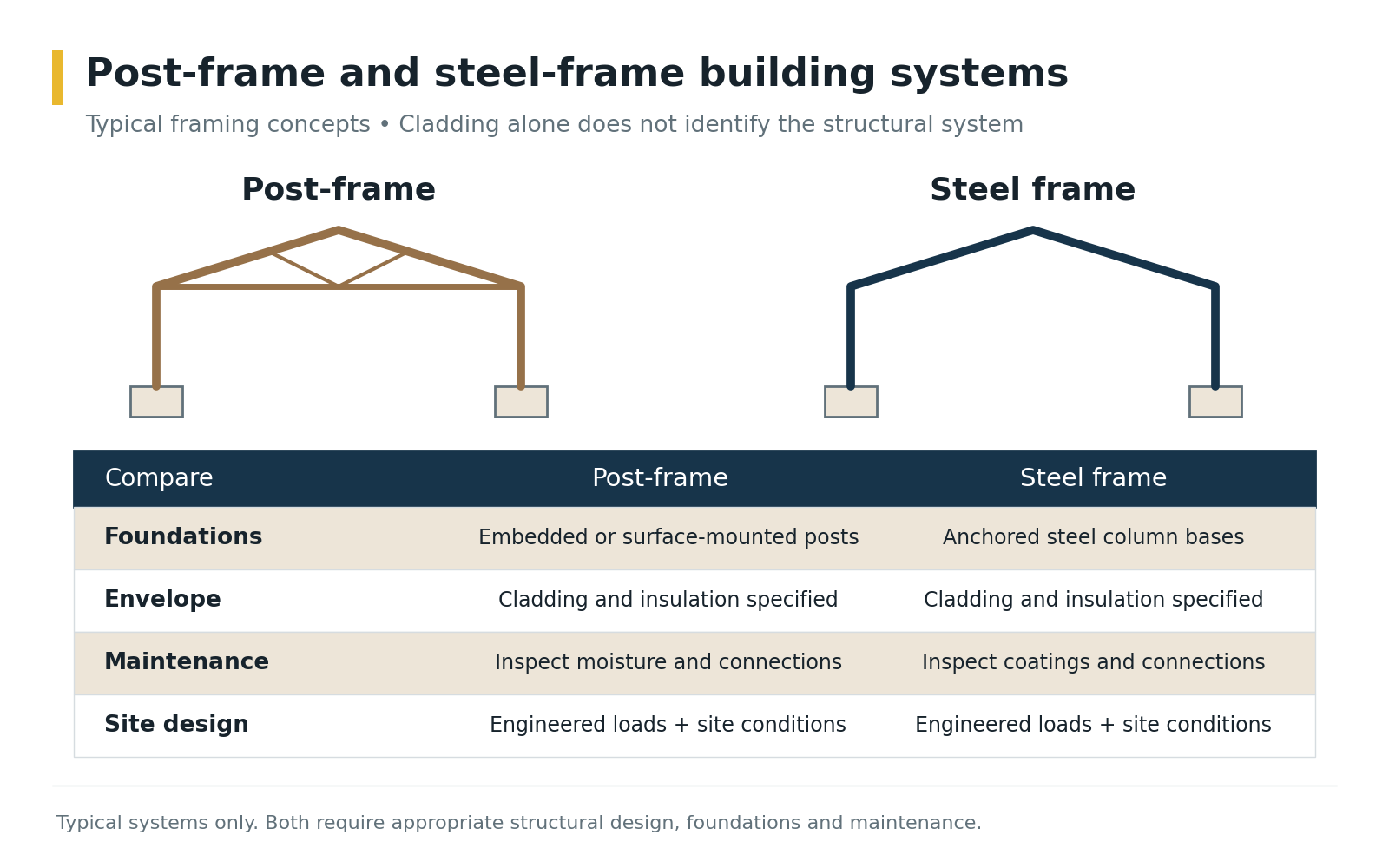
A pole barn is a post-frame building supported by wooden posts set into the ground, while a steel barn uses an engineered steel frame on a concrete foundation. Pole barns are familiar and inexpensive up front, but they rot, shift, and need ongoing maintenance. A steel barn costs more to start in some cases, yet lasts longer, resists fire and pests, and needs far less upkeep. For a building you expect to use for decades, steel is usually the better long-term investment. Here’s how a pole barn vs metal building compares.
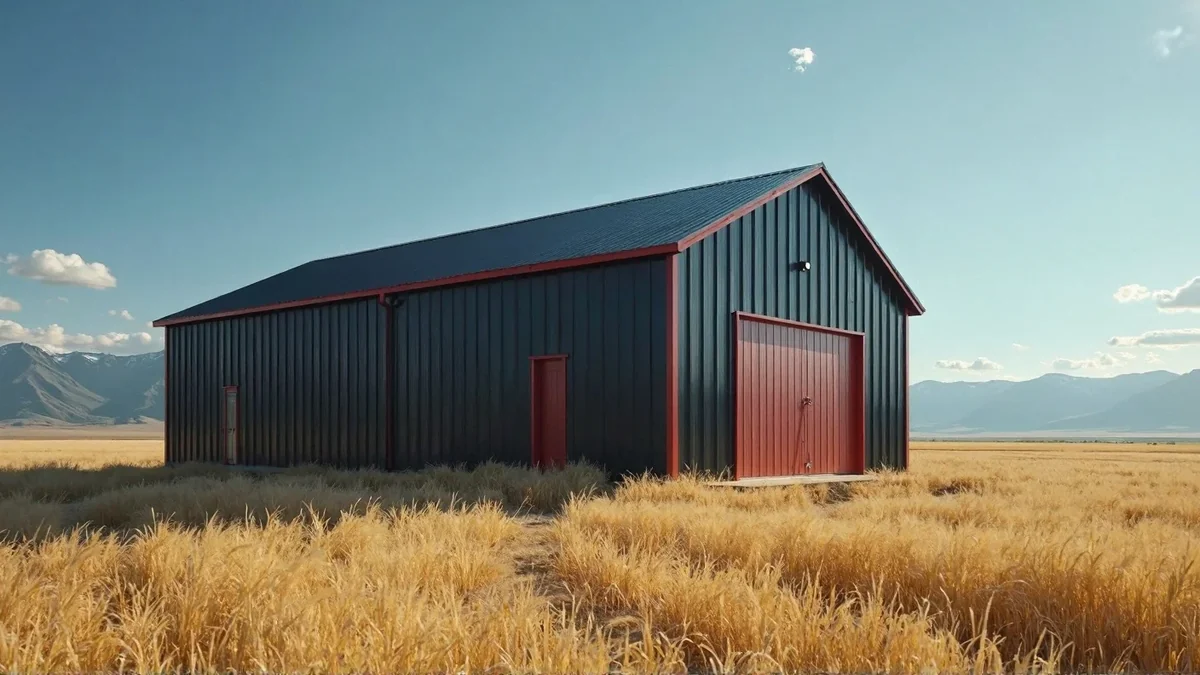
What Is a Pole Barn?
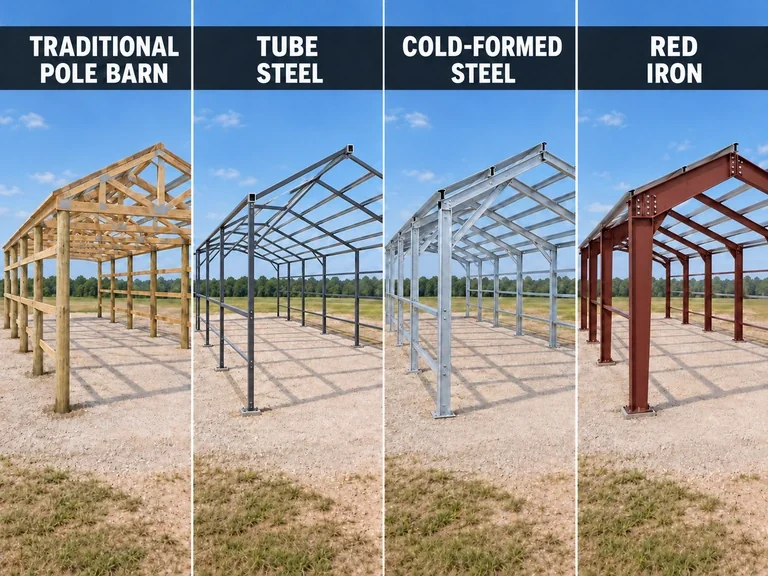
A pole barn, also called a post-frame building, uses large vertical wood posts buried in the ground or set in concrete. Horizontal girts run between the posts to support the siding and roof. The style took off in the 1930s, when farmers needed fast, cheap shelter from available materials — sometimes repurposed telephone poles. Pole barns are still common for agricultural storage, garages, animal housing, and workshops, often with a dirt or gravel floor rather than a concrete slab.
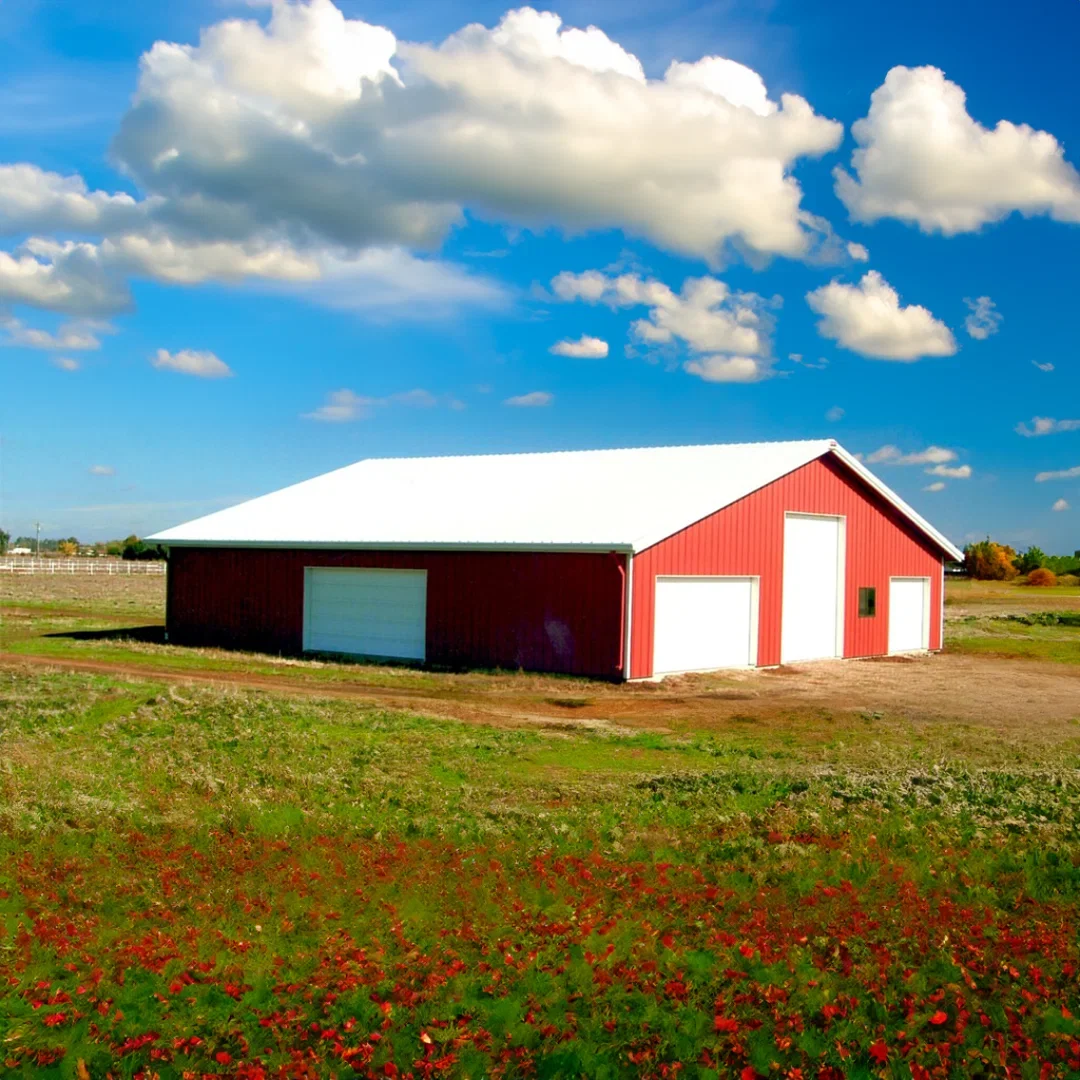
Steel Pole Barn vs. Steel Barn: Not the Same Thing
These terms get mixed up, and the difference matters. A “steel pole barn” or “metal pole barn” is still a wood-framed building — the wood posts are the structure, and only the roof and wall cladding are metal. A true steel barn uses steel columns and rafters as the structural frame, bolted together and anchored to a concrete foundation. Metal siding on a wood frame doesn’t give you the rot resistance, fire resistance, or clear-span strength of a steel-framed building.
Why Pole Barns Still Feel Like the Default
If you grew up on a farm, you’ve probably worked in a pole barn, and for many owners it’s the only type of barn they’ve known. That familiarity runs deep. But a new barn is a decades-long investment, and the most familiar option isn’t always the most practical one.
The Common Drawbacks of Pole Barns
- Rot and moisture: Even treated wood posts eventually decay, especially where they’re in contact with soil. The damage often starts below ground, where you can’t see it.
- Shifting and settling: Without a full foundation, a post-frame building can move as the ground shifts, straining the structure, sticking doors, and shortening the building’s life.
- Fire risk: Wood framing is combustible, which raises both the physical risk and, often, insurance costs — a real concern in buildings that store hay, fuel, and equipment.
- Ongoing maintenance: Painting, sealing, pest treatment, and replacing damaged members add up over the years.
Why a Steel Barn Is the Smarter Long-Term Choice
- Longer lifespan: Steel won’t rot, warp, or attract termites and rodents. A properly built steel barn lasts 40+ years with very little upkeep.
- Low maintenance: No painting, sealing, or spraying — mostly just occasional cleaning.
- Engineered for your site: Every Toro barn is engineered for your location’s snow, wind, and seismic loads, with stamped drawings for permitting and inspections.
- Fire resistance: Steel framing is non-combustible, which protects your animals, feed, and equipment and can help with insurance costs.
- Stronger with fewer pieces: A steel frame uses fewer, stronger structural members than a post-frame building of the same size, and it creates wide clear-span interiors with no posts in the way.
- Better long-term value: Lower maintenance, greater durability, and stronger resale value add up over the life of the building.
Cost: Pole Barn vs. Steel Barn
A basic pole barn can cost less up front, which is a big part of its appeal. Toro’s steel building kits start at $19 to $26 per square foot for the shell, and where your barn lands in that range depends mostly on the snow, wind, and seismic engineering your site requires. When you compare, look at total cost over the building’s life — a pole barn’s maintenance, repairs, and shorter lifespan often erase its upfront savings. Also make sure you’re comparing like for like: a quote for a building that isn’t engineered for your local loads isn’t a real comparison.
Designed Around Your Farm
A steel barn can be one large open space or divided into sections, pens, and stalls for livestock, with room for feed, equipment, and a workshop. You choose the trim and colours, and you can add doors, windows, insulation, and ventilation to suit how the barn will be used.
Want the Classic Barn Look? You Can Still Have It
Many owners love the gabled shape of a traditional barn, and you don’t have to give it up. Toro’s straight-wall steel buildings offer peaked, gabled roof options that capture the look of a traditional wood barn without its drawbacks. If you’d prefer a curved roof, arch-style Quonset buildings are manufactured by our sister company Future Buildings and sold through Toro — popular for hay, equipment, and general storage.
Easier to Build Than You Might Expect
A Toro steel barn kit is designed for nut-and-bolt assembly with basic tools, even on remote properties. Components arrive precision-cut and labelled, with detailed instructions and access to expert support if questions come up. Smaller barns are a realistic DIY project; larger ones usually go faster with a local contractor. Either way, Toro designs, engineers, manufactures, and ships the kit, and you or your contractor handle the foundation and assembly.
Choosing Between a Pole Barn and a Steel Barn
If you’re deciding on familiarity alone, a pole barn may feel like the easy path. But when you weigh durability, fire resistance, maintenance, and how long the building needs to last, steel comes out ahead for most farms, homesteads, and rural businesses.
Permits, Codes & Engineering
Agricultural buildings still need to meet real structural requirements. Design loads follow the ASCE 7 standard from the American Society of Civil Engineers, referenced by the International Code Council‘s International Building Code, or the National Building Code of Canada. Toro’s in-house engineering team — not a third-party engineer most competitors outsource to — calculates your barn’s loads for its specific address before it ships.
Related Building Types
Agricultural Buildings | Metal Barns | 9 Uses of Steel Farm Buildings
Build Your Steel Barn with Toro
Toro Steel Buildings engineers every barn to your farm and your site. Request a free quote to get started.