


Grain storage has one job above all else: keeping the harvest dry and unspoiled until it’s needed. Steel buildings have become the favored choice for grain storage because they meet that requirement more reliably than the alternatives, and offer real customization on top of it.
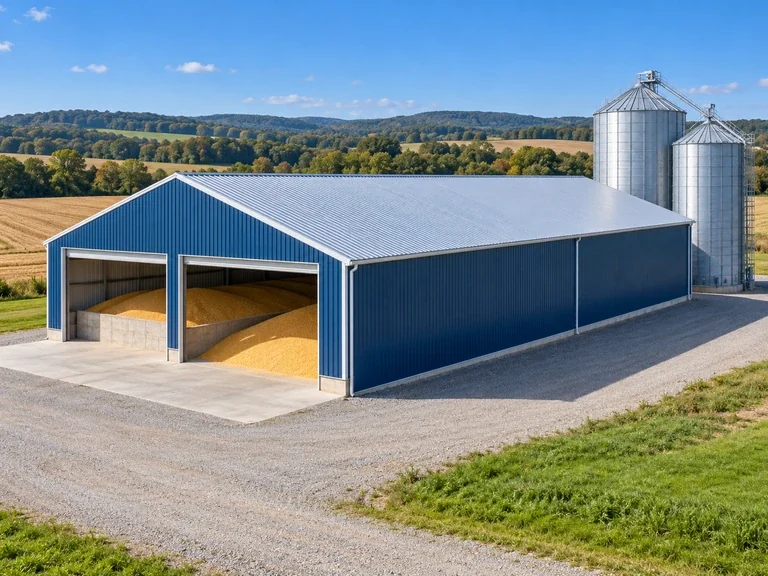
Weather Resistance Comes First
Spoiled feed, produce, or grain due to weather exposure is a genuine, recurring problem in agriculture — and it’s exactly what a steel building is engineered to prevent. Whether snow, sleet, rain, or heat, a properly engineered steel structure keeps its interior dry and sheltered year-round, giving stored grain the consistent, clean environment it needs to stay usable. Beyond just keeping precipitation out, steel’s resistance to pests and rodents removes another real threat to stored grain that a wood structure remains vulnerable to.
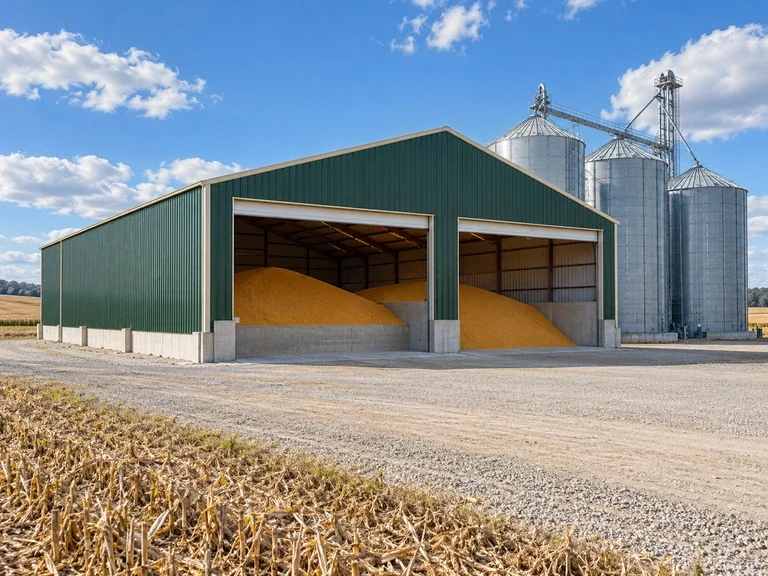
Insulation Controls Condensation
As temperatures fluctuate, interior surfaces can accumulate condensation and moisture in the air — and that moisture is exactly what causes stored grain to spoil. Adding proper insulation makes the structure thermally efficient and genuinely climate-controlled, eliminating the condensation buildup a non-insulated building can’t avoid.
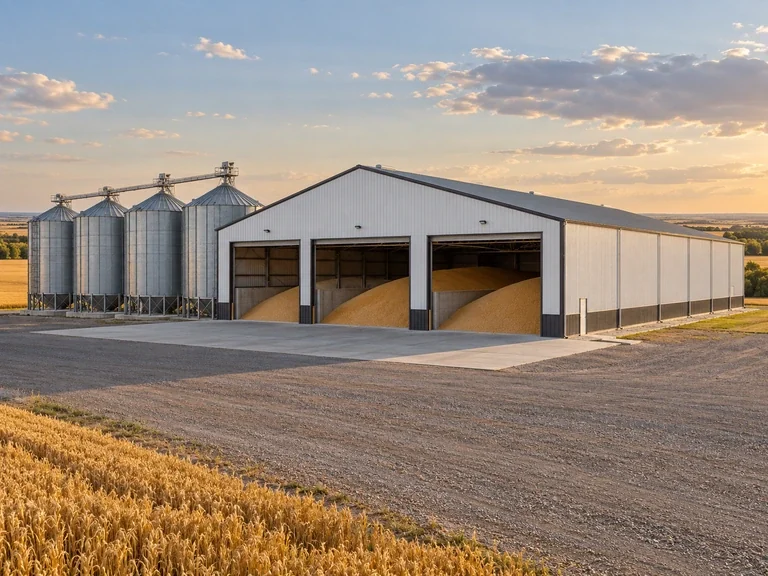
Ventilation Completes the System
Insulation alone isn’t the whole answer — ventilation regulates airflow and enables real aeration, working together with insulation to keep moisture and condensation from ever building up in the first place. Good ventilation also keeps interior temperature more consistent throughout the structure, so grain stored in one corner of the building fares the same as grain stored anywhere else, regardless of the season outside.
Sizing for Your Harvest
Grain storage needs scale directly with harvest volume, and a building sized only for this year’s yield often falls short within a few seasons as an operation grows. Clear-span interiors give you the flexibility to reconfigure storage layout as volume changes, without interior columns limiting how bins, augers, or handling equipment can be arranged.
Structural Loads Grain Storage Creates
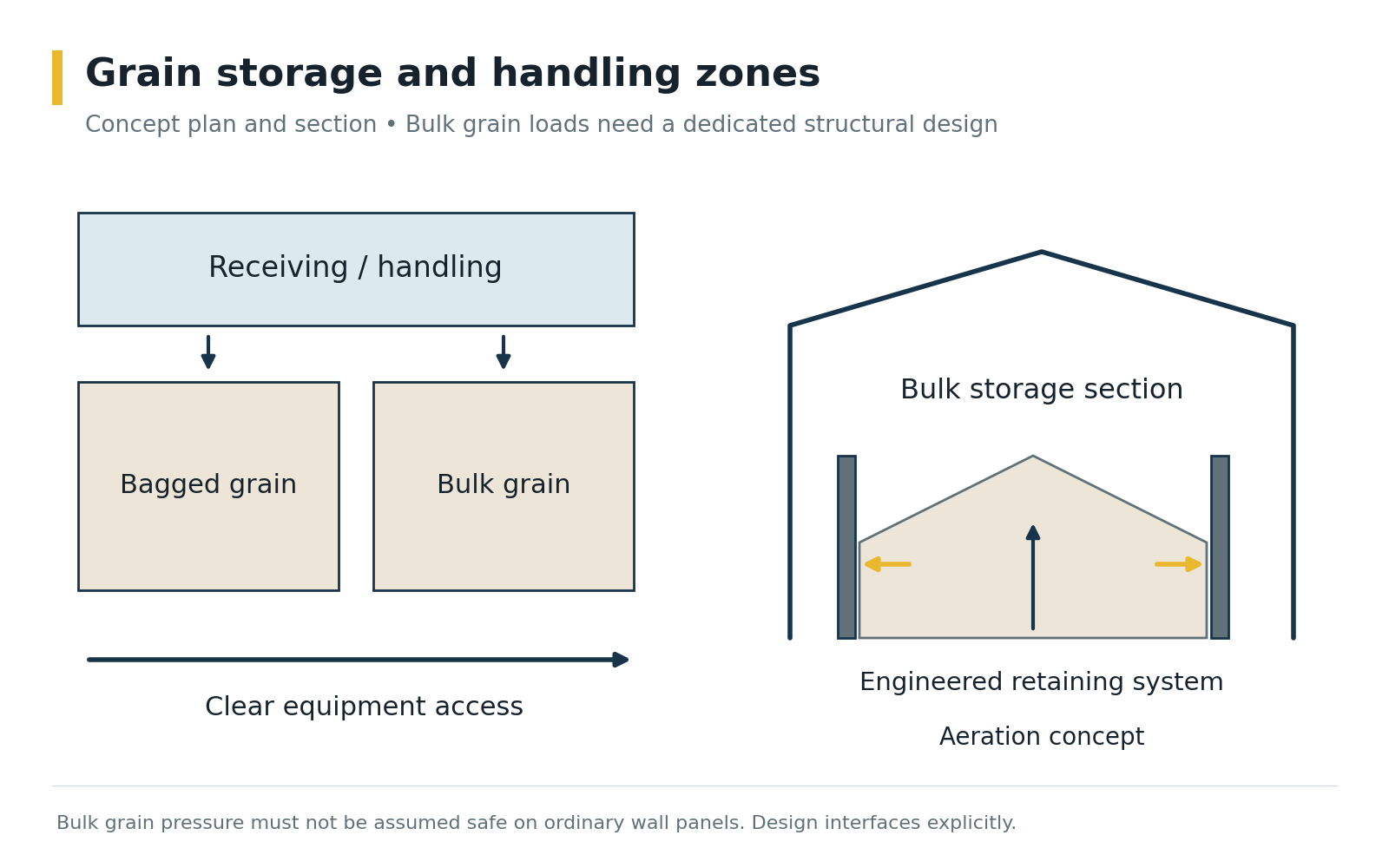
Stored grain isn’t a passive load — bulk grain exerts real lateral and vertical pressure against walls and floors, pressure that increases with volume and varies depending on how the grain is stored (loose bulk vs. bagged, for example). A building genuinely engineered for grain storage accounts for these loads specifically, rather than relying on a generic agricultural building spec that wasn’t calculated with grain’s actual physical behavior in mind.
Common Configurations
- Standalone grain storage buildings sized to specific bushel capacity
- Combined grain storage and equipment shelter under one roof
- Multi-bay layouts separating different grain types or harvest years
- Facilities with integrated handling equipment access (augers, conveyors)
Permits, Codes & Engineering
Agricultural storage structures still need to meet real structural code requirements, even in rural jurisdictions with lighter permitting overall. Structural design follows the ASCE 7 standard from the American Society of Civil Engineers, referenced by the International Code Council‘s International Building Code, or the National Building Code of Canada. Toro’s in-house engineering team calculates your grain storage building’s design loads for its specific address before it ships.
Related Building Types
Agricultural Buildings | How to Insulate a Steel Building | Preventing Condensation in Steel Buildings
Build Your Grain Storage Building with Toro
Toro Steel Buildings engineers every grain storage building to your exact site and harvest volume. Request a free quote to get started.