


What is the difference between certified and non-certified metal buildings? A metal building is engineered with either a certified or non-certified rating, and the difference isn’t visible on the surface — it comes down to whether the structure has actually been verified against your specific site’s wind, snow, and seismic requirements by a licensed engineer, or built to a generic standard instead. Here’s how certified vs non-certified metal buildings really differ.
Key takeaways
- Certified means engineered for your site. Reviewed and stamped by a licensed engineer against your local codes.
- Permits usually need it. Most building departments ask for stamped drawings.
- Insurers prefer it. Engineering documentation can simplify underwriting and claims.
- Worth it beyond the smallest projects. Especially where snow, wind or seismic loads are real.
The core difference
Certified metal buildings vs. non-certified at a glance.
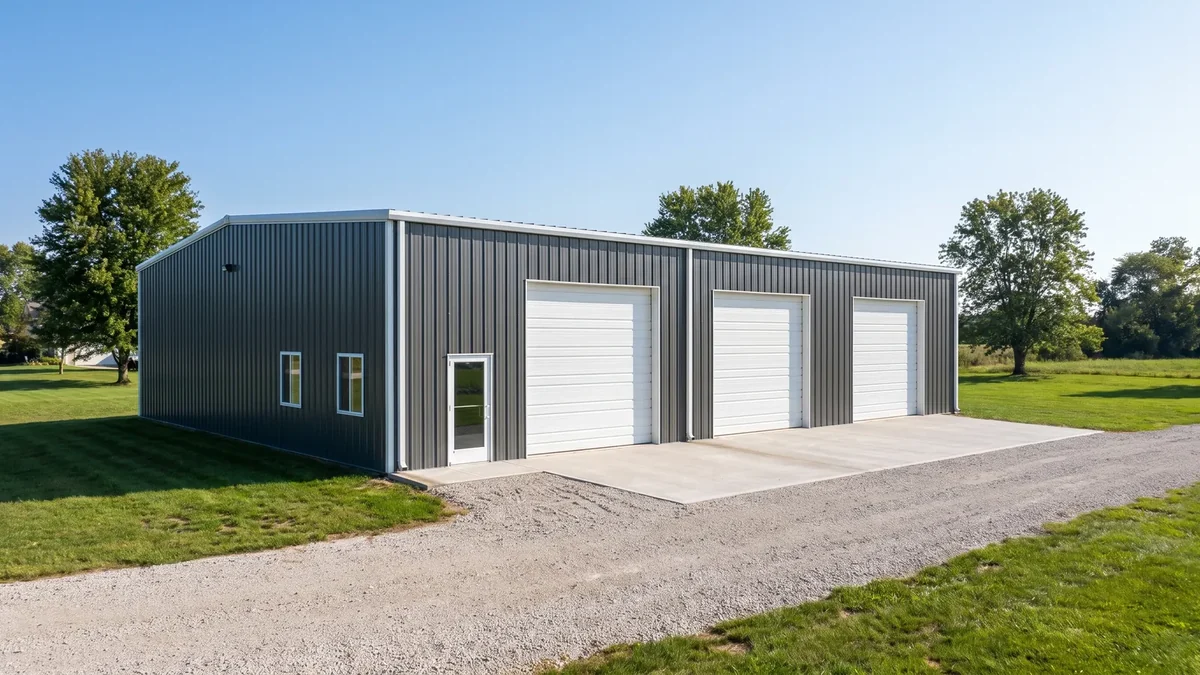
| Factor | Certified | Non-Certified |
|---|---|---|
| Engineering process | Reviewed and stamped by a licensed professional engineer | May not be reviewed by an engineer at all |
| Code compliance | Meets all required codes for your specific area | May not meet local building codes |
| Steel gauge | Framing members sized by the engineer for your loads | May use lighter, less durable steel |
| Weather rating | Designed for your specific climate and conditions | Not designed with your specific weather in mind |
| Cost | Higher | Lower |
What makes certified metal buildings different
A rating isn't the same as engineering.
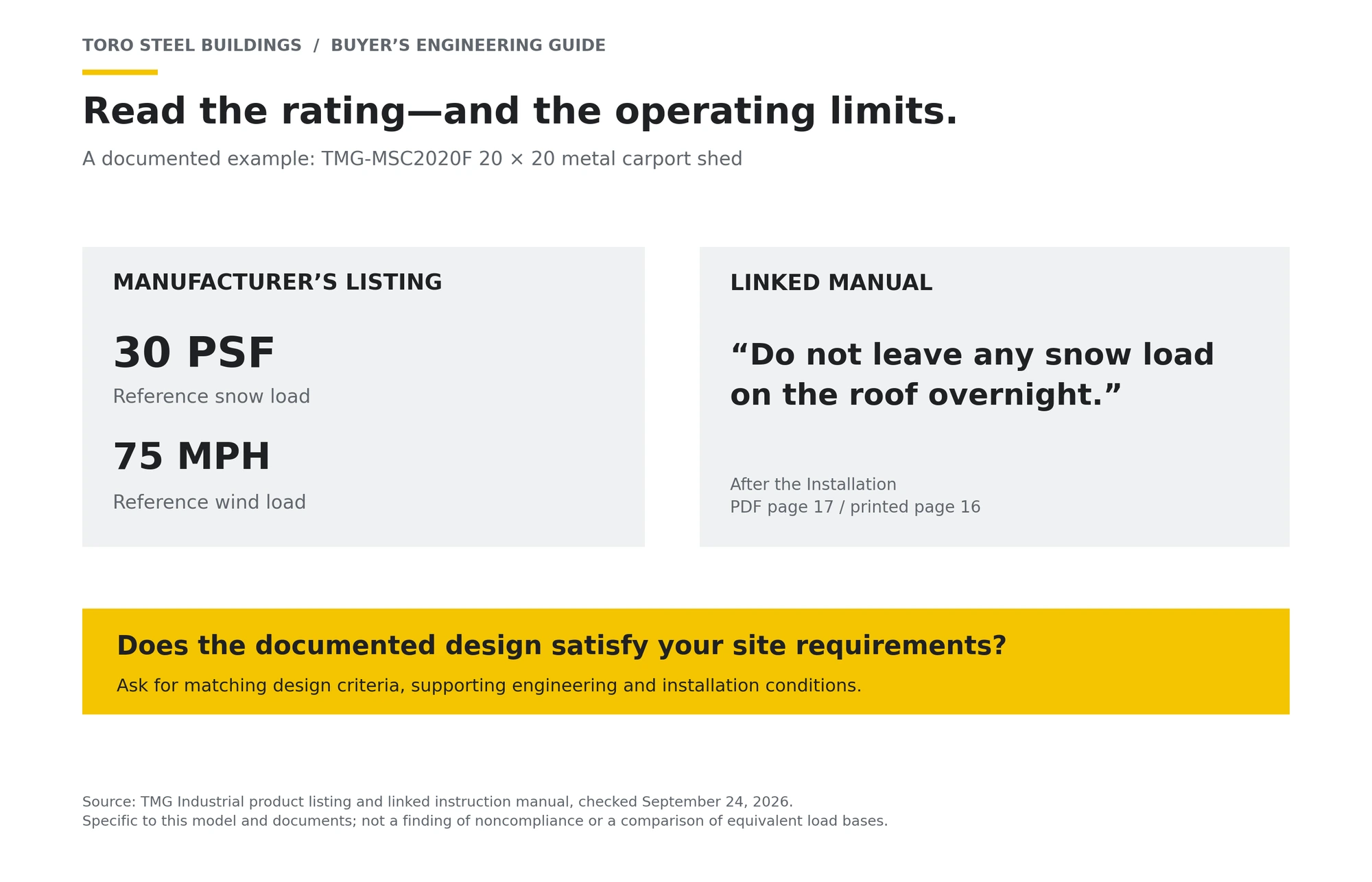
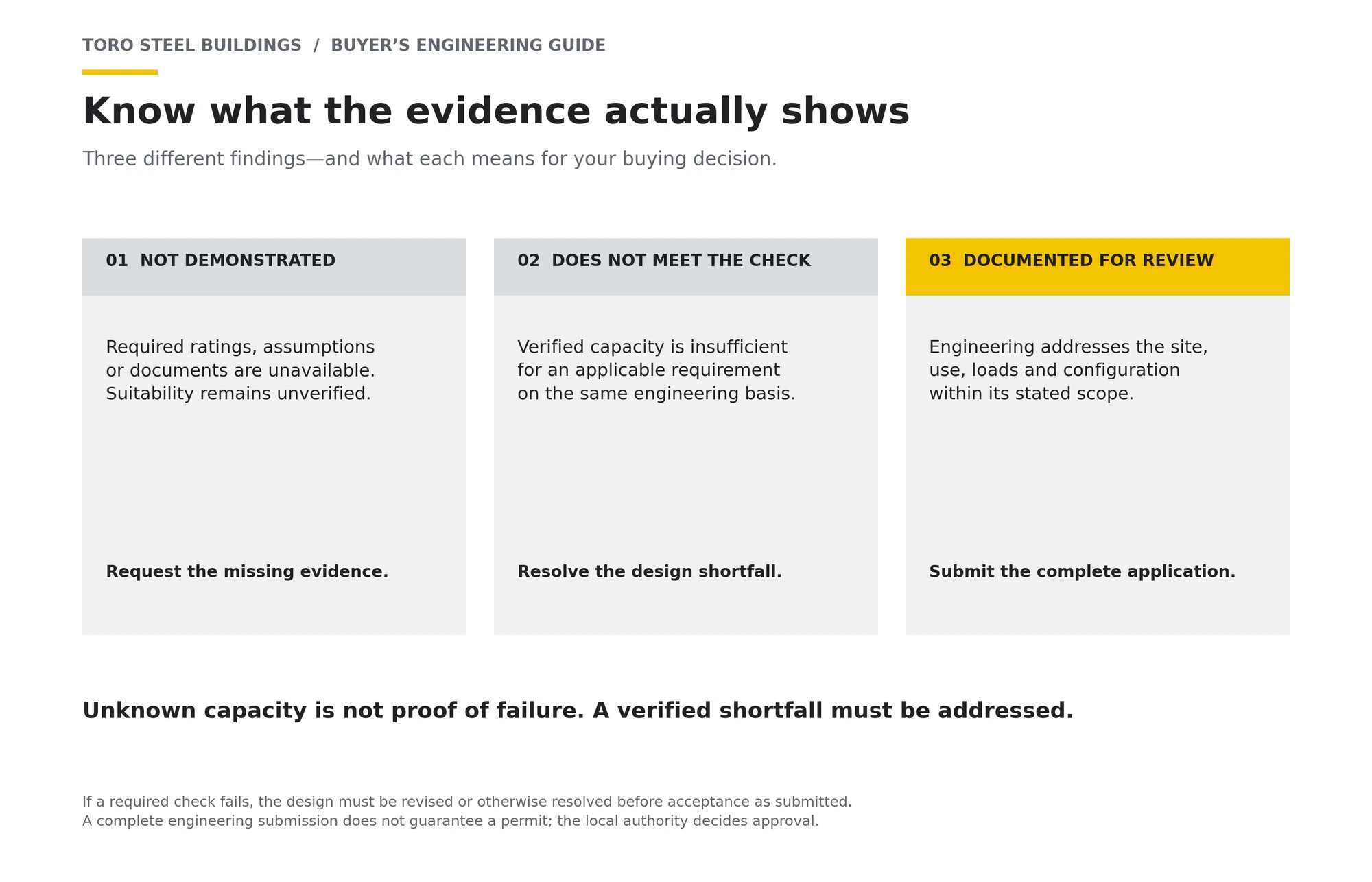
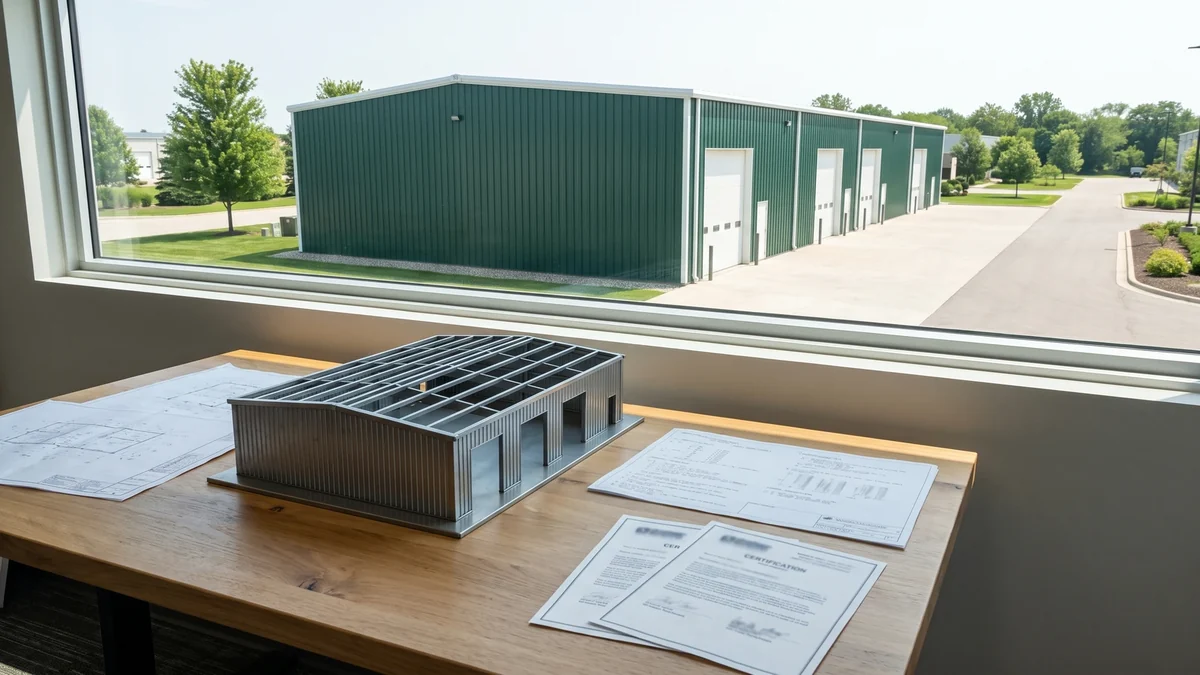
Certified metal buildings are designed for a specific project: a licensed Professional Engineer checks the frame, connections, purlins, girts, panels and anchorage against the snow, wind and seismic loads at your address, then signs and seals the drawings. A non-certified building may carry a generic rating, a sticker or a brochure number, but nobody has verified it for the place it will actually stand. The difference is invisible on delivery day and very visible in a heavy snow year.
Certification also covers how the building connects to the ground. Your drawings include the structural reactions your foundation must resist, so a local contractor can build the slab or footings to match. Without them, the foundation is guesswork, and an open-sided building can lift or slide in high winds.
Red flags of a non-certified kit
What to watch for when comparing quotes.
- A price with no address: if the quote doesn't ask where you'll build, it isn't engineered for your site.
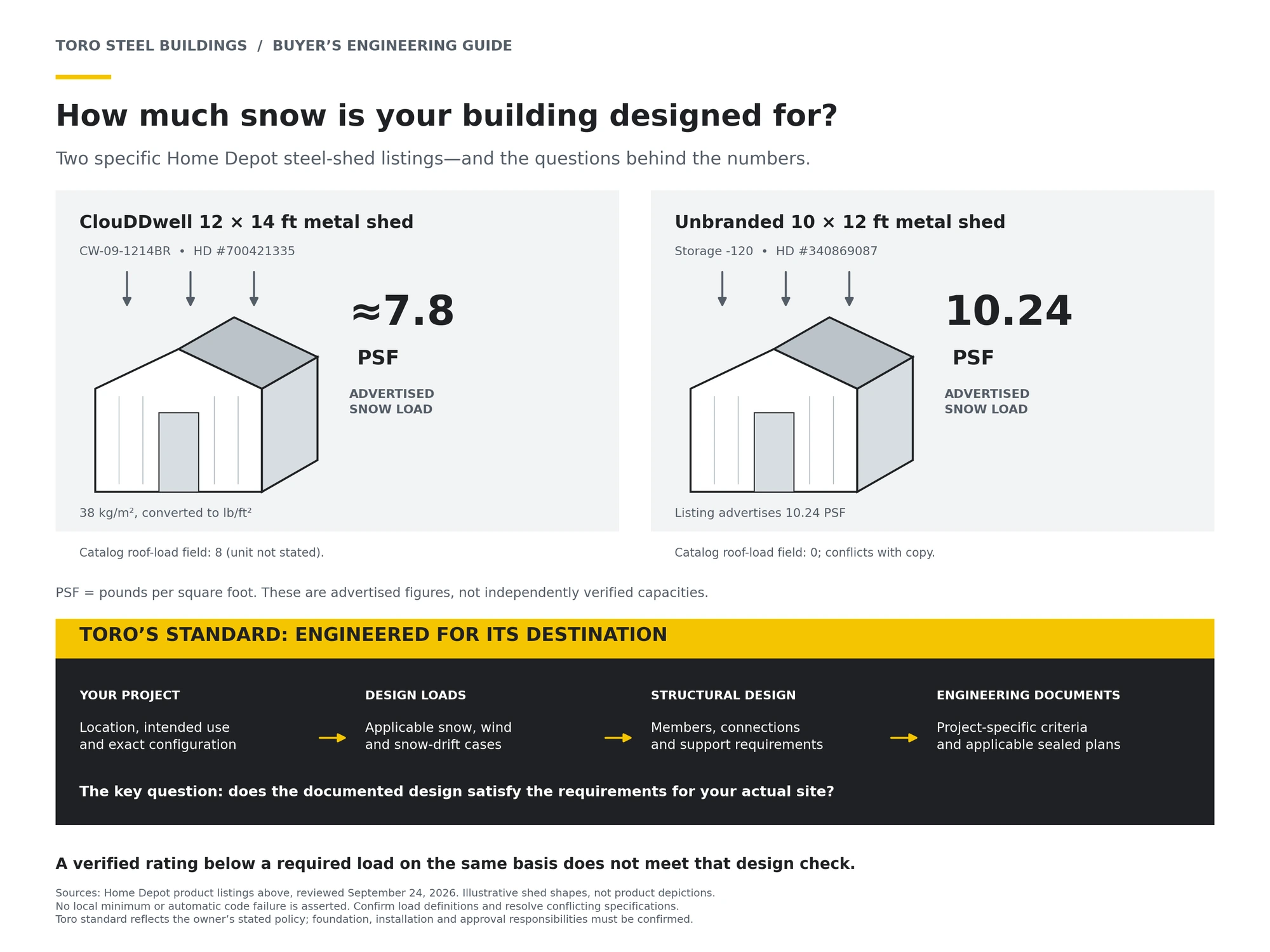
- "Rated for" without drawings: a snow or wind number on a brochure isn't a stamped design.
- No engineer named: ask who designed it and where they're licensed.
- Extra fees for drawings: some sellers charge later for the engineering your permit needs.
- Vague warranty terms: look for a written warranty with clear coverage.
Certified metal buildings answer all of these up front. If a supplier can't, keep looking.
Why non-certified can be risky
A non-certified building costs less, but it presents real risk in areas prone to severe weather, since it wasn’t engineered with your specific climate in mind. Some jurisdictions won’t even permit a non-certified structure at all — worth confirming with your local building department before considering one purely on price.
How site loads change a building
The same building isn't the same everywhere.
| Load | What it does | Why it varies |
|---|---|---|
| Snow | Pushes down on the roof | Ranges from almost none to very heavy across North America |
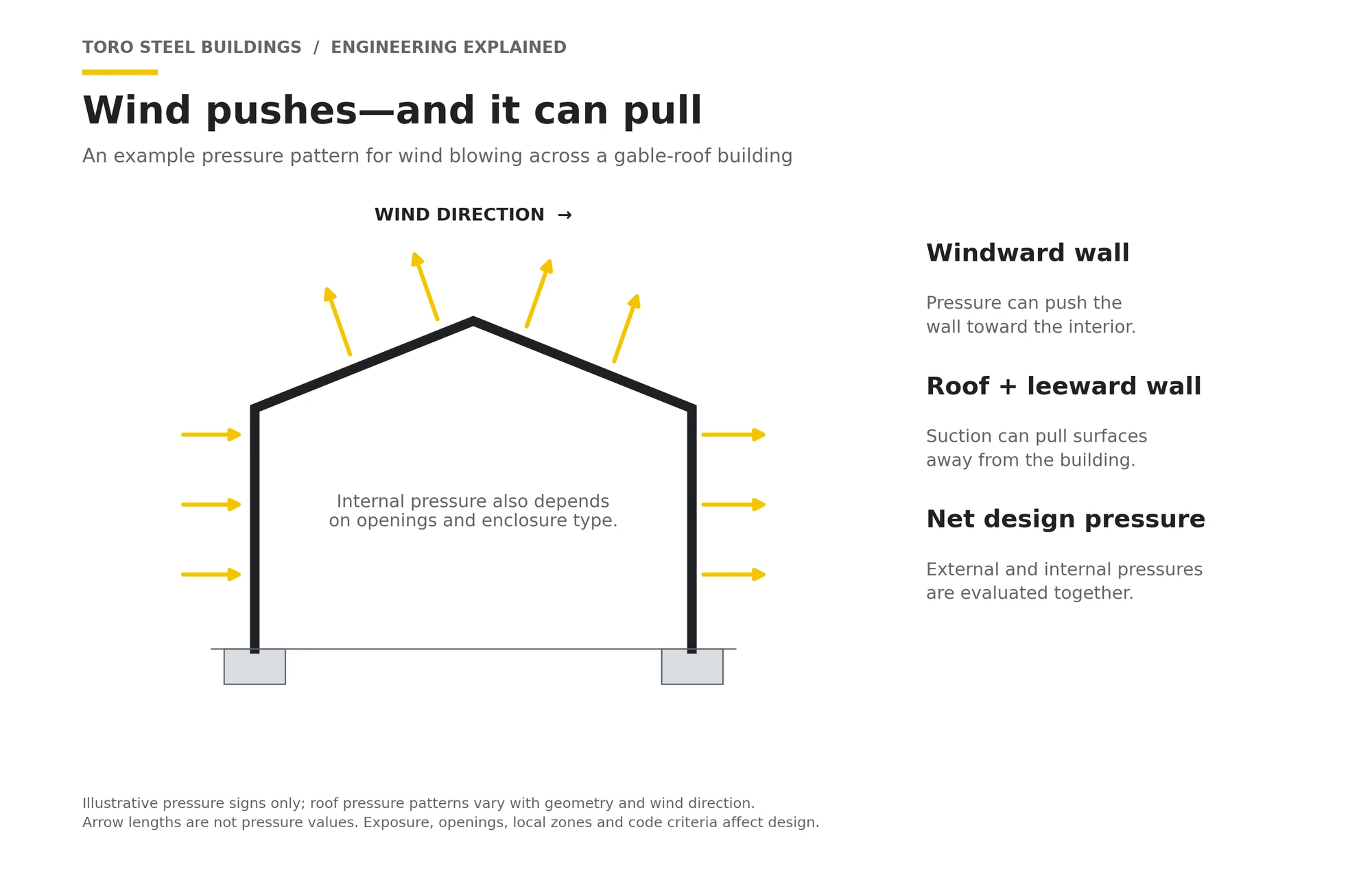
| Wind | Pushes on walls and lifts the roof | Higher on coasts, open plains and exposed sites |
| Seismic | Shakes the whole structure | Significant in parts of the West and some other regions |
| Collateral | Hangs from the framing | Lights, heaters, sprinklers or solar panels you add |
That's why Toro engineers every building for its exact address. Learn more in our PEMB guide and guide to steel purlins.
Certified metal buildings by use
Where certification matters most.
| Building use | Why certification matters |
|---|---|
| Commercial and industrial | Employees, customers and inventory inside; strict code review |
| Agricultural | Livestock, feed and equipment worth far more than the building |
| Residential garage or shop | Permits, insurance and resale value |
| Barndominium or home | Residential codes, lenders and appraisers |
| Small storage in a mild climate | Lower risk, but local codes may still apply |
For homes, see the steel home kit guide; for farms, see 9 uses of steel farm buildings.
Certification in the U.S. and Canada
Different codes, same principle.
In the U.S., certified metal buildings are designed to the loads in ASCE 7, as referenced by the International Building Code and adopted by your state or local jurisdiction. In Canada, buildings are designed to the National Building Code of Canada and provincial codes, with steel design following CSA Group standards. In both countries, the stamp must come from an engineer licensed where the building will stand, which is why Toro's engineers are licensed and registered in both.
Insurance considerations
Insurance providers often ask for engineering documentation when underwriting a policy on a metal building, and a certified structure with stamped drawings is generally easier to insure than one without them. In the event of a claim — storm damage, structural failure, or otherwise — having certified engineering on file can also simplify the claims process, since the insurer has clear documentation of what the building was actually designed to withstand rather than having to make assumptions after the fact.
What certification means for your permit
Most building departments require stamped engineering drawings before they’ll issue a permit for a structure of any real size, and a certified building’s drawings are prepared specifically to satisfy that requirement — signed by a licensed Professional Engineer, verified against your address’s actual code requirements. A non-certified building may still get built, but without that documentation, getting it approved can mean delays, additional engineering fees added after the fact, or in some jurisdictions, an outright rejection of the permit application.
Does building type change the calculation?
Certification matters most where the stakes of a structural failure are highest — a commercial warehouse holding inventory and employees, an agricultural building housing livestock, or any structure in a region with genuine snow, wind, or seismic exposure. For a small, low-risk storage structure in a mild climate, the gap between certified and non-certified may matter less in practice, though local code requirements often apply regardless of how the building is used. The safest approach is to check your specific jurisdiction’s requirements before assuming a smaller or lower-stakes project doesn’t need certification.
Common myths about certification
What buyers often get wrong.
"It's just a small building, so it doesn't matter."
Snow and wind don't care how big the building is. Small carports and garages fail in storms too, often taking vehicles with them, and many municipalities require permits regardless of size.
"A higher gauge number means stronger steel."
It's the opposite: a higher gauge number means thinner steel. What matters is that every member is sized by an engineer for your loads.
"I can get it certified later."
Engineering after the fact can mean extra fees, reinforcement or a rejected permit. It's simpler to buy certified metal buildings from the start.
"All steel buildings are engineered the same."
Some are engineered for a specific address; others carry a generic rating. Always ask which one you're getting, and ask to see the drawings before you buy.
How to check a building is certified
Six questions to confirm you're buying certified metal buildings.
1. Ask for stamped drawings
Drawings signed and sealed by a licensed Professional Engineer, not just a generic rating.
2. Check the design loads
The snow, wind and seismic numbers should match your address, not a regional average.
3. Confirm code references
ASCE 7 and the IBC in the U.S., or the National Building Code of Canada.
4. Ask who did the engineering
In-house engineers or a third party, and whether they're licensed where you'll build.
5. Read the warranty
A real warranty in writing, with clear terms.
6. Call your building department
Confirm what they need before you buy.
Is the extra cost worth it?
Whether you need a certified building depends on your local codes, the structure’s purpose, and your own risk tolerance. For anything beyond the most minimal, non-critical use, the peace of mind of knowing your building is engineer-approved and up to code is generally worth the added cost — and in areas with real snow, wind, or seismic exposure, it’s less an upgrade than a genuine safety consideration.
Toro's steel building kits start at $19 per square foot in the U.S. and $26 per square foot in Canada (CAD). Freight isn't included. Your size, options, intended use, and local snow, wind and seismic loads and codes set the final price, so every building needs a quote to make sure it meets the loads and codes where you'll build.
Toro's pricing is for certified metal buildings engineered for your address, which is why every building needs a quote rather than a one-size-fits-all number. See steel building prices and why tube steel kits fall short.
What this looks like in practice
A certified building’s engineering doesn’t stop at a generic calculation — it’s reviewed against your project’s specific address, so the wind and snow load numbers used in the drawings match the actual conditions your structure will face, not a regional average. That distinction matters most in exactly the situations where a building’s performance is tested hardest: a heavy snow year, a severe wind event, or a seismic zone with real activity.
Get a certified metal building quote
Tell us where you'll build and how you'll use it, and a building specialist will send a quote within 1 business day.
How Toro certifies every building
Toro sells only certified metal buildings, engineered in-house for your address.
Toro's in-house engineers, licensed and registered in both Canada and the U.S., design every building for its exact location and use. In Canada, Toro is certified to the CAN/CSA-A660 standard for steel building manufacturers. Buildings are made in 30+ manufacturing facilities across the U.S. and Canada, and every U.S. building is manufactured in the U.S. Toro designs, engineers, manufactures and ships the kit; you or a local contractor handle the foundation and assembly.
- Design itPlan your certified building in the free 3D Building Designer or with a building specialist.
- EngineeringToro's in-house engineers design it for your address's snow, wind and seismic loads and stamp the drawings.
- PermitUse the stamped drawings to apply for your building permit.
- FoundationYou or your contractor build the foundation to the structural reactions Toro provides.
- Delivery and assemblyThe kit ships to your site, and you or a local contractor bolt it together. Toro doesn't install.
See how Toro buildings are made


Want a certified building sooner, or for less?
Toro makes 500+ buildings a month, and about 10% are never delivered because a customer's plans change. These clearance buildings are offered at a discount, re-engineered for your site if needed and come with stamped drawings. Inventory changes daily and not every building is listed online, so call to ask about unlisted clearance inventory. Clearance buildings are re-engineered for your site if needed.
Permits, codes and engineering
Engineered to ASCE 7, the IBC or the NBC.
Certified buildings are engineered against the ASCE 7 standard from the American Society of Civil Engineers, referenced by the International Code Council‘s International Building Code, or in Canada, the National Building Code of Canada. Toro’s buildings are certified and engineered in-house — not by a third-party engineer most competitors outsource to — for your specific address before they ship, and every certified building carries a real warranty behind it: a 1-year limited material warranty plus a 25–40-year paint warranty on straight-wall buildings, depending on panel and finish, and a 50-year limited rust perforation warranty on arch-style buildings (see the warranty page).
Frequently asked questions
Still comparing certified metal buildings? Price your building and a building consultant will walk you through it.
What is a certified metal building?
A metal building whose design has been checked against your site's snow, wind and seismic loads and local codes, and stamped by a licensed Professional Engineer.
Do I need a certified building for a permit?
Most building departments require stamped engineering drawings for a structure of any real size. Check with yours before you buy.
Are non-certified buildings cheaper?
Usually, but they may not meet local codes, can be hard to permit and insure, and carry more risk in severe weather.
Does certification affect insurance?
Insurers often ask for engineering documentation, and stamped drawings can make underwriting and claims simpler.
Are Toro buildings certified?
Yes. Every Toro building is engineered in-house for its address and ships with engineer-stamped drawings.
Do small buildings need certification?
It depends on your local codes and the building's use. Codes often apply regardless of size, so confirm locally.
Keep reading
Related building types
Commercial buildings | Agricultural buildings | Garages | Straight-wall buildings | Warehouses
Get a certified metal building
Toro Steel Buildings provides certified drawings on every project, engineered to meet or exceed your local codes, with a quote within 1 business day.