


Steel is customizable, expandable, longer-lasting, and faster to construct than most alternatives — which is exactly why it’s become the standard choice for commercial construction, from a first-time startup’s modest footprint to a big-box retailer’s massive open floor plan.
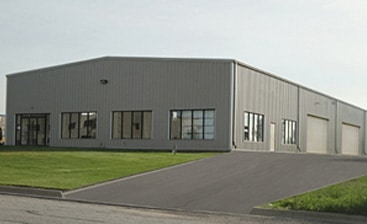
Why Big-Box Retailers Choose Steel
Big-box stores need massive, wide-open spaces — the kind wood or stone construction simply can’t deliver economically. Building that same footprint in wood or stone would require enough pillars and posts to effectively create walls inside the store. Steel’s clear-span capability is the only building system that accommodates the open-space concept a big-box retailer actually needs, with spans up to 200 feet before any interior supports are required. Beyond the open floor plan itself, retailers commonly add skylights for natural light and large sliding doors sized for moving big-ticket inventory in and out — practical additions that matter as much to daily operations as the shell’s overall footprint.
Why Startups and Growing Businesses Choose Steel
A new business needs a place to work without the cost and delay of conventional construction — prefab steel gets a startup operational faster and at lower upfront cost. As that same business grows, steel construction scales too: if your space is lacking for storage, manufacturing, offices, or service work, a steel building can expand more efficiently than adapting a conventional structure.
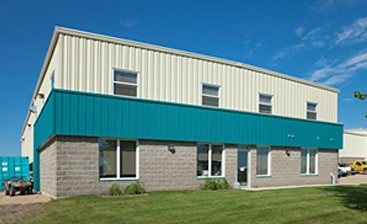
Common Commercial Applications
- Retail stores and big-box locations
- Restaurants and food service
- Office and mixed-use space
- Mini-malls and multi-tenant retail
- Recreational facilities and arenas
- Schools and gymnasiums
Business Ideas That Work Well in a Steel Building
Beyond the obvious retail and warehouse uses, a prefabricated steel building’s durability, flexibility, and cost-effectiveness make it a strong foundation for a range of specific ventures. An auto repair shop or custom garage benefits from the high ceilings needed for vehicle lifts, a spacious interior for working on multiple vehicles at once, and large roll-up doors — with insulation and ventilation options keeping the workspace comfortable year-round. A dog grooming and boarding facility can be laid out with dedicated grooming stations, kennels, and play areas, all within a structure that’s easy to clean and built to handle heavy daily use. Recreational facilities — ice rinks, indoor sports courts, and riding arenas — depend on steel’s clear-span capability specifically because a support column in the middle of a rink or court isn’t just inconvenient, it’s a genuine safety hazard.
Buying vs. Renting Commercial Space
Renting is the faster path to opening your doors, but every lease payment builds your landlord’s equity, not yours. A steel building is a one-time capital investment that becomes a lasting business asset — one that can be sold, expanded, or leveraged later, none of which a lease allows. Beyond equity, ownership also removes the renewal risk a lease carries: a landlord declining to renew, or raising rent significantly at renewal time, can force a costly relocation right when your business depends on staying put. The calculation favors renting when your space needs are genuinely short-term or still uncertain; it favors owning once you know the space you need today is the space you’ll still need in a few years.
Upgrade Options Worth Considering
- Steel Sheeting Upgrades: Thicker-gauge or high-grade panels like Galvalume Plus add strength and weather resistance.
- Skylights: Natural lighting reduces reliance on artificial lighting and the energy cost that comes with it.
- Interior Build-Out: Different commercial uses need different interiors — a restaurant needs a kitchen and dining area, an office needs a breakroom and workstations.
Permits, Codes & Engineering
Commercial buildings face code review for occupancy, fire safety, and accessibility on top of standard structural requirements. In the U.S., that’s calculated against the ASCE 7 standard from the American Society of Civil Engineers, referenced by the International Code Council‘s International Building Code. In Canada, that’s the National Building Code of Canada. Toro’s in-house engineering team — not a third-party engineer most competitors outsource to — calculates your building’s design loads for its specific address before it ships.
Related Building Types
Commercial Buildings | Warehouses | PEMB: The Complete Guide
Build Your Commercial Steel Building
Toro Steel Buildings engineers every commercial project to your exact site and use case. Request a free quote to get started.